Author: anyoneteachone
Frustrated With Your Doctor?

The doctor’s role as an authority figure is very much deeply ingrained in the American culture. In addition, no one wants to be perceived as a difficult patient. It’s fine to follow your doctor’s orders if it is based on shared medical decision-making. However, when you’re in a room with a paper on the exam table crinkling under your bare bottom you may not feel so empowered. That being said, you cannot afford to be intimidated by your doctor and be a passive bystander. You need to keep focused on what is being ordered for tests and medications. Do not make rash decisions at that moment but rather go home and research it and look at other options if they are available. I would disregard those doctors who tell you everything on the Internet is incorrect. You must be careful when researching of course but there are very reliable nonprofit organizations that provide sound guidance like the Mayo Clinic and the Cleveland clinic. Dig for the facts and not someone’s recommendations because they had a similar medication or similar test. Ask a lot of questions, make sure you know the tests are justifiable and medications are not in conflict with what you are ready taking or the side effects that could be dangerous to your particular condition. We would not dream of buying a weed-eater let alone a car on someone’s recommendation without looking at facts and figures and comparisons first.
Be careful and be precise when you explain a symptom to your doctor. Many unnecessary x-rays, MRIs, and other procedures are commonly ordered because doctors do not want to be sued for not screening properly, for instance, if the patient has a heart attack or some other unknown known event after the appointment. Doctors are often paid a fee for these procedures and have a “better safe than sorry” justification. The same goes for referrals to specialists. They are invaluable in diagnosing a problem but need to be terminated when their expertise is no longer needed and a primary care physician can take over.
Make sure your communication is open with your doctor.
- Ask questions such as “what does that mean”? Most doctors just assume that you understand their medical terminology that they use every day. They are under incredible time pressure and if you do not bring a list of complaints to them you will probably get rushed out before you have all of your answers and concerns addressed.
- Don’t be afraid to tell your doctor that you’ve considered other hypotheses about your health based on your own observations.
- Avoid “on the way out the door” complaints. Those are things you suddenly remember like “oh and by the way I’m having pain in my back or trouble swallowing”. At that point the doctor can’t really do anything so they tell you to make another appointment or go to the emergency room. By then your 15 minute allotted appointment is up.
- Be honest when talking to your doctor about your out-of-pocket costs. Most people are shy about bringing up financial concerns even thinking they might get substandard care if they mention money is an object. But the fact is that in almost all cases physicians have good options available. They may know about free prescription drug samples or programs from the pharmaceutical companies that could pay for your medications.
Putting these suggestions in place may be difficult at first but it will empower you as a patient. After all it is your body and your life. Too many times miscommunication or lack of communication between patient and doctor ends up with serious consequences. There are no old-time general doctors anymore that know your family and have the time to sit down and have a conversation with you. The old practice of physicians using critical questioning to get a better knowledge of what’s really going on with the patient has been replaced by scheduling as many patients in 15 min. increments as possible. Never forget the medical field is a huge business and as such you are the customer. You are the profit and the loss on their financial sheet but that also gives you enormous power because without your insurance and money they would not exist as the huge corporation that they are. You are the customer, you are the product and you have a right to accept or decline medications, tests or procedures. If you have a doctor that is very uncomfortable with that you need to look around and find a doctor that became one for the right reason.
Is Universal Design For You?
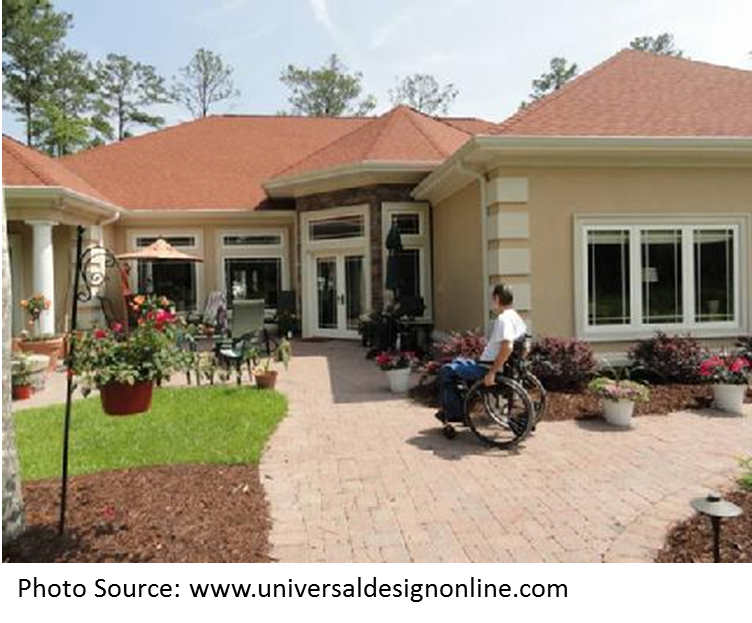
Universal design is the design of products and environments that is usable by all people without the need for adaptations. Some people use the term “aging in place”. Owning a home is a huge investment but so many reach that goal only to find later it’s not user-friendly as they age and their physical limitations prevent them from using most of the features in the home they originally loved. In addition the need to remodel usually comes at a time when people are on fixed incomes and cannot afford it. Other events such as accidents or illnesses can make it difficult to remodel as money is flowing out to the medical field while on a drastic time limit.
The answer, of course, is to be proactive in design when you buy your home or remodel your existing one. The best time is while you are still working and can afford it a little at a time.
Some areas to consider are –
- No step entry. No one needs to use stairs to get into a universal home or into the homes main rooms.
- One story living. Places to eat, use the bathroom and sleep are all located on one level, which is barrier free.
- Wide doorways that are 32 to 36 inches wide let wheelchairs pass through. They also make it easy to move big items in and out of the house.
- Wide hallways. Hallways should be 36 to 42 inches wide. That way, everyone and everything moves more easily from room to room.
- Open floor designs. Everyone feels less cramped. And people in wheelchairs have more space to turn as well as people using walkers.
- Some universal features that could make it safer as you age or incur a disability are-
- Floors and bathtubs with nonstick slip surfaces help everyone stay on their feet. They’re not just for people who are frail. The same goes for handrails on steps and grab bars in the bathrooms.
- Thresholds that are flush with the floor that could make it easy for a wheelchair to get through a doorway as well as walkers.
- Good lighting helps people with poor vision. And it helps everyone else see better too.
- Lever door handles and rocker light switches are great for people with poor hand strength. But others like them too. Try using these devices when your arms are full of packages. You’ll never go back to knobs or standard switches again.
As a society we are proactive in so many other areas like insurance, retirement savings, yearly wellness checks and we also need to be proactive in keeping our independence and freedom to stay comfortable in our own home by making these changes. Aging happens to all of us, it is inevitable, and by preparing for it we also prepare for any other physical changes that may come down the pike before retirement. Many people end up in nursing homes waiting on remodels to happen so they can go home. Don’t let this happen to you. There is much more you can provide that can make your house user-friendly to all ages and all people in your family.
For more information on Universal Design you can contact Southwest Center for Independent Living by visiting their website at www.swcil.org
It’s a Dog’s Life

DELILAH
Delilah doesn’t feel the need to impress anyone or prove herself.
She is not concerned with social image.
She is concerned with being happy which includes belly scratching and “Beggin Strips”cheese flavor.
She is built for speed but has couch potato syndrome.
She has a propensity for biting her nails and shaking all over when something is confusing or scary or needing to get attention for “Beggin Strips. She’s not into biting, she’s into loving and being loved. Her life is simple, easy and is lived in the moment.
Delilah shows me what life should be about. I wish for you all what Delilah has, happiness, ability to love and be loved, living each day looking for the good stuff and as many “Beggin Strips” you can hold.
Perfect Food For A Party

These are so easy and taste so good!
Ham & Cheese Sandwiches for a Crowd
Prep time: 5 mins
Cook time: 15 mins
Total time: 20 mins
Serves: 8
Ingredients
· 1 package (12 ct) of King’s Hawaiian Rolls
· ½-1 lb. ham deli meat
· Swiss cheese, thinly sliced
· ½ cup butter, melted
· 3 Tbs Worcestershire sauce
· 2 Tbs mustard
· 2 Tbs brown sugar
· dash of onion powder
Instructions
1. Cut each roll in half, lengthwise and place bottom halves on the bottom of a baking pan.
2. Layer bottom half with ham slices and cheese and place the top half back on.
3. In a bowl, Mix together the butter, Worcestershire, mustard, brown sugar and onion powder. Pour sauce over sandwiches, drenching each one. Cover tightly and marinade anywhere from 4-24 hours. Overnight works best!
4. Preheat oven to 350°. Bake for 15 minutes uncovered, or until cheese is melted and bun tops are a bit golden.
Still Camping
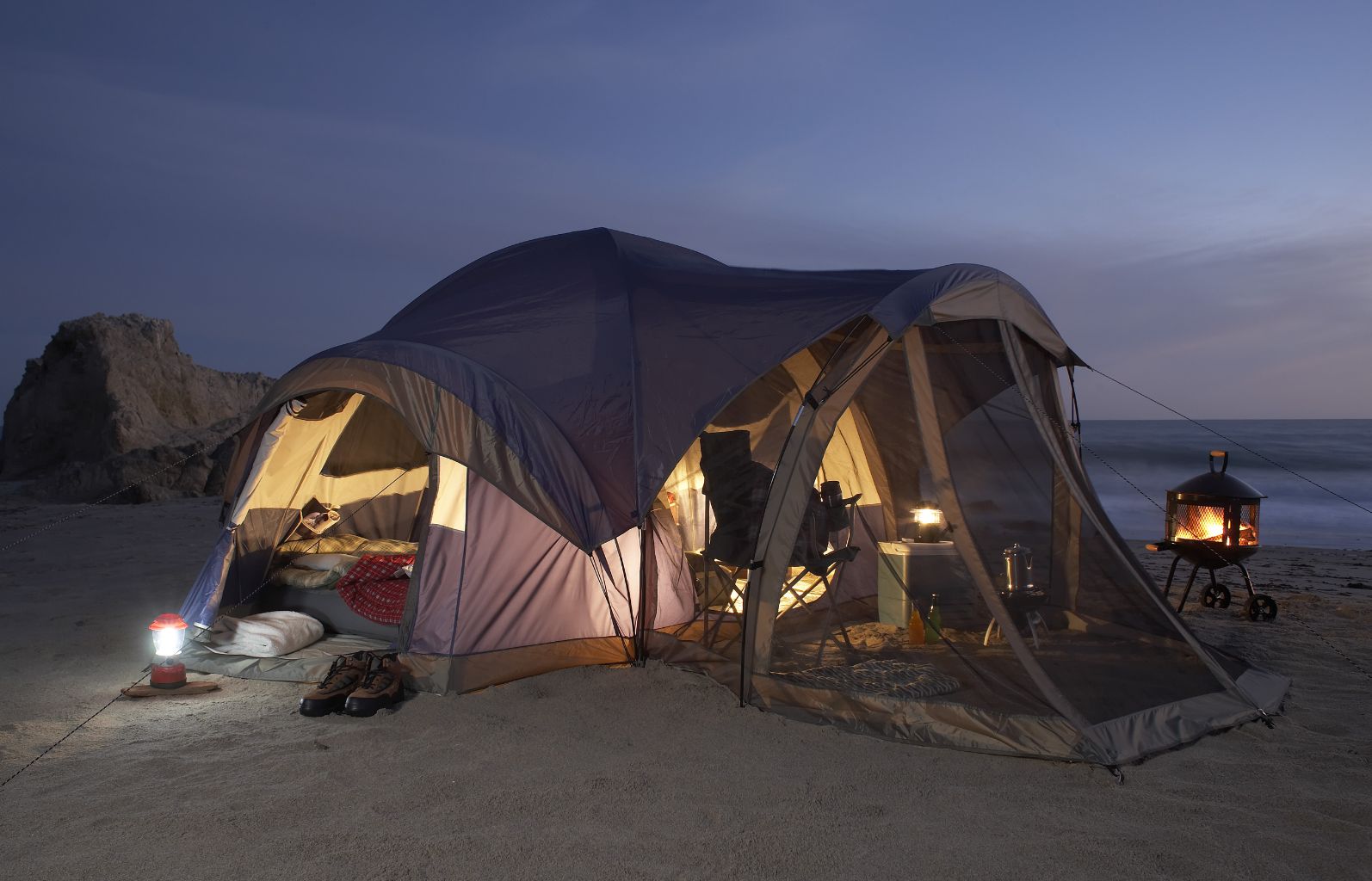
Most of my friends would probably characterize me as energetic, determined and fun loving. It is true I want to be active and involved with life, especially nature. I love camping and everything that goes with it like the smell of wood blazing in a campfire, cooking on an outside table, waking up to the sounds of Crows, Finches and squirrels chattering. It feeds my Soul and brings me comfort I can find nowhere else. That is the reason I decided I was not going to let the disability I incurred almost 20 years ago keep me from what I have enjoyed all my life.
The early years of camping with a disability were arduous to say the least. At that time people with disabilities were not even considered in the planning of recreational outdoor areas. The Americans With Disabilities (ADA) was brand new in 1990 and nothing was even close to being enforced. Some planners and budget minded designers perceived laws like the ADA as intrusive. Just like the Civil Rights Act implemented in 1964, both have been praised and ridiculed as an answer to equality. There is no doubt, however, the guidelines enforced by both have made our society a better place to live and work for everyone. For people with disabilities it ensures equal opportunities to access the very same experiences and privileges people without disabilities have always cherished.
Now it’s beginning to be a whole new experience with accessible docks, concrete pads to camp on that allow smooth wheel chair access, accessible toilets and showers, raised picnic tables and fire grills, accessible entrances to lodges and bait shops and plenty of disabled parking. I no longer have to take a lawn chair into the shower to sit in or take a roll of paper towels for hand drying because the hand blowers were too high or be restricted to one or two places that were not to steep or rocky to fish safely. One of my favorite camping areas is Roaring River State park located just south of Cassville about an hour from Springfield. Known for it’s premier trout fishing, it nestles in a valley with clear ice blue water meandering from a deep underground cave. If you are lucky enough to wake before the whistle that signifies fishing is open, you will drink in a breathtaking view of the mist lifting off the earth in a mystical silent dance. A weekend there and you will feel like you’ve had a two-week vacation.
There is also a huge variety of adaptable equipment for anyone with any disability to enjoy their favorite outdoor activity weather it’s camping, hunting, fishing, archery, bird watching or just walking. A great place to find out about all of these wonderful technologies and actually try some of them out is at the annual “Day At The Range and Outdoor Adventure Fair” held at the Andy Dalton Shooting Range in Bois D’Arc. Additional information can be found on the web at www.swcil.org or by calling Southwest Center for Independent Living at 417-886-1188. This is a great way to find out everything available to you and maybe some things you didn’t even know existed! And where else can you have all that and a free lunch too?
I have always believed being in outdoor recreational activities promotes life long development of character as well as camping skills, teamwork and appreciation of the environment. It gives a chance to experience first hand what none of us can afford to lose, our connection and responsibility to the earth we share. Camping is a group experience for my family and my four kids were raised loving it. Now I can enjoy it equally with them and my eight grandchildren. Thanks to the dedication of disability advocates and the visionary planning of the Missouri Department of Conservation, the outdoors in Missouri is available to all of its citizens. Everyone knows Nature is ever evolving so why shouldn’t we?
Transfer Your Potential

Why is it that when most of society looks at people with disabilities or seniors they only see what is apparent right in front of them? Actually, if they consider looking beyond that to transferable skills the person carries within them it would blow them away. Just the fact that they have survived by pushing through obstacles mentally and physically all their lives creates a person who knows how to get things done. Thinking out-of-the-box to accomplish most things others take for granted is a unique talent. These groups are doers. They don’t have time to complain of headaches, aches and pains or limitations. They are the champions of “if there’s a will there’s a way”. I think transferable skills are so overlooked because they are so basic. Here is a list of just a few –
accepting responsibility
adaptable
coaching
computer skills
creativity
design
foreign language
meeting deadlines
planning
There are hundreds more. Ask yourself this question. If I were in a car accident tomorrow and became a paraplegic what transferable skills could I use to continue a quality-of-life? What are my three favorite accomplishments? What activities make me the happiest? Use these awareness tools to empower not only yourself but seniors and people with disabilities that cross your life experience. There is energy in empowerment and power in potential.
After Holiday Shopping Comfort Food
Sometimes you just have to feed yourself some comfort food. I try to eat light but dragging home worn out and drained from elbowing crowds and fighting for a disabled parking space this easy and cheap casserole has my name on it. The savory, warm, gooey cheese and potatoes is so relaxing it can take you from exhaustion to serenity. As it bakes for an hour you can take a warm bubble bath while smelling that wonderful aroma from the oven.

Here’s what you are going to need: Preheat to 375 degrees
1 bag (2 pounds) frozen hash browns, thawed 1 can cream of chicken soup 1/4 cup finely chopped onion 1/4 cup butter, melted 1/2 cup of sour cream 1/2 cup of milk 1 teaspoon salt 1/4 teaspoon pepper 3 cups of shredded Colby jack cheese
Here’s what you need t0 do:
Blend all ingredients. Put half the amount in greased baking dish, sprinkle additional cheese. Add remaining mixture.
Bake in the preheated 375° F oven for 1 hour until hot and bubbly and it begins to brown on top. Allow to sit for about 10 minutes before serving.
What’s In A Name?
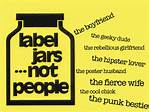
What’s in a name? Well, for one thing it’s how our language identifies things like people, places and objects. Words have the power to create pictures in our mind. Depending on our experiences, beliefs and concepts, we automatically pre-judge. For instance if you are told the word “horse” many would come up with a completely different picture of one. In addition, emotional response would also be varied based on your experiences and what you have been told about horses. Words even have the power to affect us physically. Think of sinking your teeth into a juicy sour lemon and you get the picture.
When using words to communicate we may intend one concept while the receiver is forming another. This phenomenon seems to happen a lot in politics wouldn’t you say? So, how do you say exactly what you mean? One way is to use correct descriptions and shy away from slang. We have all heard the jokes about the latest “politically correct” terms for various cultures, jobs, life events and so on. I admit they can get pretty absurd when taken to the extreme but there are reasons they exist nonetheless. Using descriptive words in a careless way can destroy not only a persons self image but whole cultures that are already struggling to hold their position of equality. The disability culture is a good example. In the past society saw them as weak, sick and helpless. Some still adhere to this misconception.
This false picture was, in most part, created from images that portrayed pity and limited expectations. The disability community constantly attempts to educate society on the destructive affects of negative language.
Listed below are typical terms that have a negative meaning because of their tendency to label a person as their disability. Listed under the negative language are examples of words that are degrading and produce erroneous images. The “words with dignity” under each group give more dignity and a much clearer concept of what you are communicating.Negative Meaning
Crippled man, blind woman, polio victim, epileptic, Cerebral palsied
Words With Dignity
Make reference to the person first, then the disability. If the disability is not the focus of the conservation don’t mention it. Crippled and victim should never be used to describe a person with a disability.
Negative Meaning
Handicap
Words With Dignity
The term “handicapped” is derived from the image of a person standing on the corner with cap in hand begging for money. People with disabilities do not want charity. They want an equal access to their community.
Negative Meaning
Wheel chair bound or confined to a wheel chair
Words With Dignity
People are not tied or bound to their wheel chairs nor are they confined to them 24 hours a day. They are used for transportation, therefore, people are wheel chair users.
Negative Meaning
Invalid, victim, afflicted with
Words With Dignity
A person with a disability is not necessarily sick or unhealthy. They are often just disabled. The word invalid is actually saying the person is in – valid which I’m sure is not the intended concept you are trying to say.
As you say the words in the negative group observe the image your mind produces. Like it or not they create a reaction just as surely as that sour, juicy lemon. Everyone has the power to change society’s negative language and labels by refusing to use them. Change is difficult and you may wonder why bother? Because, if someone hadn’t bothered, the Webster definition for wife would be “ old lady” and we would all be professing our vows with “I take this dude to be my lawful wedded old man.” That conjures up a picture doesn’t it?
If you have made a commitment this year to improve your world try using more considerate language. It is a small personal change that has the power to impact the world in a giant way.
Blaze The Trail

Ever notice how subtle change is sometimes? You know, like a new building appears where you were sure there was a field yesterday? That’s how I felt when I started researching this article about access to people with disabilities in our community. I found many things I had forgotten weren’t always there and now I see more and more access every day. Almost all the large department stores have electric carts. Even five years ago this was very rare. A few stores had one, now the average is four. Accessible bathrooms are being remodeled to include an accessible stall, lower sink and dispensers and larger turn around areas for wheel chairs. Automatic doors are becoming more common as are entrances with no steps. All of our city buses are equipped with lifts. If you don’t live close enough to a bus stop, and you qualify, Access Express will pick you up at your door. OATS provides vans with lifts outside the city limits. Everyone benefits, people with disabilities, people with baby strollers, and seniors with canes or walkers.
The community is finally realizing that the more they respond to the customers need, the more money they make. It has started a mind set in entrepreneurs to offer more and more convenience. For instance, pizza isn’t the only thing you can get delivered to your door. A growing number of grocers will take your order over the phone and deliver it to you. Many pharmacies are doing the same. There are even people who will holiday shop for you or run errands for a fee. Homes can be built already accessible now so it will be ready as you grow older when remodeling is usually too expensive on a fixed income.
There are approximately 54 million people with disabilities in the United States and now communities are watching this sleeping giant wake up and demand equality. Slowly but surely, it is being granted. The Americans With Disability Act is a great liberating piece of legislation but it sits silent until you give it a voice. Success has happened because of people’s perseverance and determination to set things right. Freedom is the responsibility of all people who enjoy it. We must be ever diligent, ever watchful. When you observe no access, grocery carts parked in a disabled parking space, electric carts broken or not even available, bathrooms inaccessible, entrance doors too heavy to open; speak up, write a letter, make your requests be known.
Man’s Best Friend Redefined
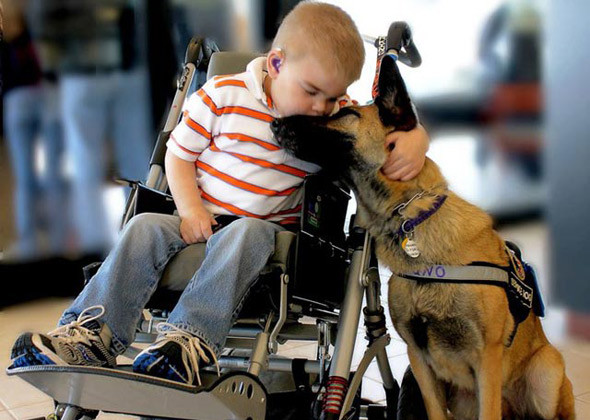 While shopping for Christmas, a sticker on one of the windows caught my attention. It said “Guide Dogs Welcome”. I had noticed a similar sign a few months ago while in Denver on vacation. I don’t know where these business owners even found the signs. Maybe it was before 1990 when ADA was passed, who knows? The law states all service animals are to be allowed in any business serving the public. There is no law stating they must be certified and no one can require the individual to disclose their disability in order to justify the service animal. They are only allowed to ask if the animal is an assistance or service animal. And the misconception that guide dogs are the only service animal certified as an assistance dog is erroneous. As more doors open for people with disabilities the duties of service animals constantly broaden to accommodate new freedom of independence.
Almost everyone is familiar with guide dogs for the blind. They have been around since post WWI when they were developed and trained in Germany for veterans who were blinded during the war. Now, they exist all over the world. They are easy to identify with their harness and handle. For the visually impaired they supply independence, freedom and companionship. Sixty years later we have advanced with training methods to assist many more disabilities. Most, however, are not familiar with the extensive variety of these highly trained and specialized dogs. Some people mistake them as pets and do not realize that years of training have gone into these valuable dogs. I have attempted to list the most common service dogs but training methods advance constantly and I am sure someday there will be a service dog for almost any disability.
With the success of the Seeing Eye programs, trainers began to explore other disabilities that could benefit from the dog’s amazing ability to help people. The next step involved developing a hearing dog. These dogs are trained to basically convert noise into touch. They respond to everyday sounds such as the telephone, the doorbell or even the owners name being called by rubbing, nose nudging or even tugging on its owner. In an emergency such as a fire alarm, the dog will respond by giving more agitated alerts, such as actually jumping on the owner. The hearing dog can also be taught sign language.
Service dogs assist physically disabled people by performing all sorts of assistance tasks such as opening doors, turning on lights, assisting in transferring by bracing, even pulling their owners wheel chairs up steep ramps. You can often recognize them by their backpacks full of useful items for their owners.
Seizure detecting dogs are the newest assistance dogs. These dogs are trained to recognize behaviors associated with an individual’s seizures. The dog can be trained to get help or stay with the person if needed. Alert capability is a natural occurrence where the dog “alerts” the owner that a seizure is about to occur. True alerting behavior is usually the result of the dog and human developing a very close bond. This alert capability enables an individual with seizures to locate a safe place before the seizure actually occurs.
Therapy dogs improve emotional and physical health simply by interacting with a person. Health care professionals have found that petting a dog can reduce stress and lower blood pressure and pulse rates in some individuals. There are many volunteer organizations throughout the country that help train volunteers to take their dogs to nursing homes, hospitals, mental health centers and prisons on therapy missions. These programs allow access to animals for a segment of the population that otherwise may not have access to animals.
There is even a class of service dogs called “combination dogs.” These dogs are trained to assist people with multiple disabilities that include visual impairment. In addition to work as wheelchair support dogs, combination dogs act as hearing dogs and guide dogs. They are trained to identify barriers to mobility like traffic, cracks in the sidewalk, overhanging branches and obstacles in the path of the owner. And, of course the guide training can also help the owner locate many items using the “find” command (find the door, find the elevator, find the comb).
I would like to share a few last words on some do’s and don’ts when you see someone with an assistance dog. While it’s perfectly fine to talk to the person about their dog, refrain from petting or talking directly to the dog. It will distract the dog from its work. The same holds true for feeding treats or attempting to play. Once the dogs are home their owners have built in play and cuddling time for them. Being an assistance dog is a job that these dogs love to do but keep in mind it is a structured training that has taken years to accomplish.
 Anyoneteachone